Oman's Warning: America Has Lost Control of Its Own Foreign Policy
In a rare opinion piece, Oman's foreign minister argues the US has made its "greatest miscalculation" by allowing itself to be drawn into an "unwanted entanglement" in Iran. He warns the path to peace requires acknowledging hard truths.
 Sercan Roni

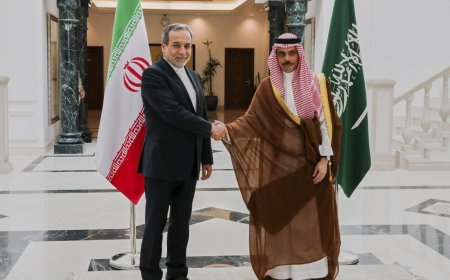
In a remarkable and candid opinion piece published in The Economist on Thursday, Oman's Foreign Minister Badr Albusaidi delivered a stark warning to Washington and its allies: America has lost control of its own foreign policy and is now entangled in an "unwanted" war in Iran from which extrication will be exceedingly difficult. The essay, penned by a diplomat who has long served as a mediator between Washington and Tehran, offers a sobering regional perspective on the current crisis .
Albusaidi argues that the United States made its "greatest miscalculation" by allowing itself to be drawn into the conflict at all. "This is not America's war," he writes bluntly, asserting there is no realistic scenario in which both Israel and the US will achieve their stated objectives. He warns that Israel's goal of toppling the Iranian regime would require a prolonged ground campaign, opening "a new front in the forever wars which President Donald Trump previously vowed to end" .
The Omani minister calls on Washington's friends to intervene, but insists doing so requires acknowledging "the extent to which America has lost control of its own foreign policy." This unprecedented critique from a key US partner suggests deep unease among Gulf states about the trajectory of the conflict and Washington's decision-making process .
Perhaps most striking is Albusaidi's characterization of Iran's retaliatory strikes against Gulf countries that host US bases. He describes them as an "inevitable, if deeply regrettable" response to a war explicitly "designed to terminate" the Islamic Republic, adding that retaliation was "probably the only rational option available to the Iranian leadership." This framing, while not endorsing the attacks, offers a glimpse into how Tehran's actions are perceived by some regional actors .
On the economic front, Albusaidi points to the disruption of shipping through the Strait of Hormuz as a foreseeable consequence of the war's architects, warning that it is driving up energy prices and threatening a deep recession. "If this had not been anticipated by the architects of this war, that was surely a grave miscalculation," he writes .
Turning to diplomacy, Albusaidi acknowledges the immense difficulty of reviving negotiations. He concedes it would be "certainly difficult" for Iranian leaders to return to talks with an administration that has twice switched from negotiations to bombing and assassination. Yet he concludes with a glimmer of hope, noting, "But the path away from war, hard though it may be for both parties to follow it, may have to lie through precisely this resumption"