The Erbil Gambit: Is Washington Engineering a Kurdish-Led Ground Offensive Against Tehran?
As Iranian missiles strike Erbil, evidence suggests a deeper geopolitical play: A calculated U.S. strategy to provoke a Kurdish uprising and forge a unified front for a looming ground campaign.
 Sercan Roni
The "Deep State" Strategy: Provocation as a Catalyst
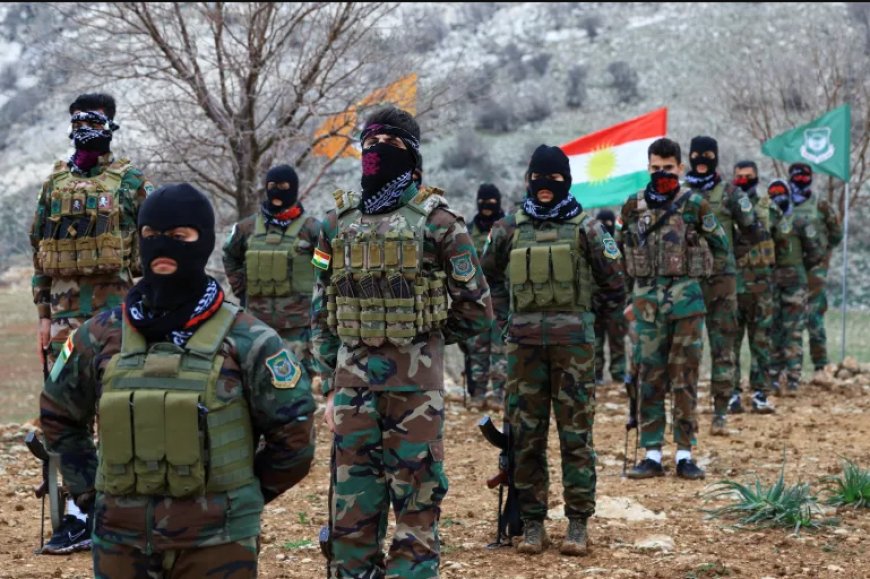
While official statements from the Pentagon focus on "containment," a more sophisticated strategy appears to be unfolding in the shadows of the Iranian-American conflict. Reliable geopolitical indicators suggest that the U.S. "deep state" is maneuvering to leverage the Kurdish population as the primary spearhead for a potential ground operation inside Iran.
The strategy is surgical: utilize the escalating friction between the Iranian military and Kurdish factions to leave the Kurds with no choice but full-scale collaboration with Western coalition forces. By positioning the Kurdish regions of Iraq and Iran as the inevitable "front line," Washington may be aiming to create a self-fulfilling prophecy of ethnic resistance.
Erbil Under Fire: Tehran’s Preemptive Strike
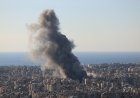
Today’s devastating missile and drone strikes on Erbil are not merely "retaliation" for U.S. airstrikes. From Tehran’s perspective, these are preemptive strikes designed to decapitate the logistical and political headquarters of this burgeoning "Kurdish Front."
By targeting Erbil and Duhok, Iran is sending a clear, violent message to the Kurdistan Regional Government (KRG): The cost of being a launchpad for a U.S.-led ground invasion is total destruction. Tehran recognizes that if the U.S. successfully integrates Kurdish Peshmerga and Iranian-Kurdish opposition groups (like Komala and PDKI) into its tactical framework, the Islamic Republic faces a domestic insurgency it may not be able to contain.
The Mechanics of the Trap
The theory of "forced collaboration" rests on three pillars currently visible in the region:
The Security Vacuum: By drawing Iranian fire into civilian and economic hubs in Erbil, the U.S. effectively proves that the KRG cannot survive without direct American military intervention.
Ethnic Mobilization: Every Iranian missile that hits a Kurdish home serves as a recruitment tool for the U.S., fueling the narrative that the only path to Kurdish survival is the downfall of the current regime in Tehran.
The Ground Game: With 3,000 to 3,500 U.S. troops reportedly maneuvering in the region, the infrastructure for a joint U.S.-Kurdish ground push is being laid under the guise of "regional defense."
Conclusion: A High-Stakes Collision Course
The current escalation suggests that we are beyond the point of simple border skirmishes. If the U.S. strategy succeeds, the Kurds will become the "boots on the ground" that Washington has been hesitant to deploy itself. However, Iran’s aggressive stance today shows they are willing to set the entire region ablaze to prevent this "Kurdish Corridor" from opening.
In this high-stakes game of shadows, Erbil has become the chessboard, and the Kurdish people find themselves at the heart of a strategy that could either lead to a new regional order or a catastrophic prolonged conflict.