Gulf Monarchies Privately Urge US to 'Finish the Job' as Iran Strikes Expose Vulnerabilities
Arab leaders reportedly pushing Washington for decisive action against Iran as drone strikes on Gulf infrastructure expose economic vulnerabilities, despite public calls for restraint.
 Sercan Roni

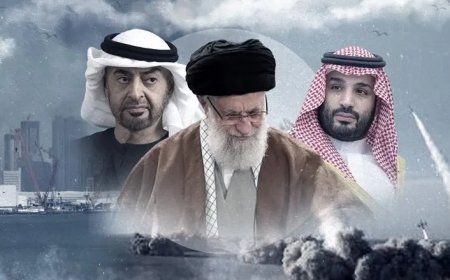
Behind public calls for de-escalation, some Arab leaders are privately urging Washington to "finish the job" against Tehran, terrified that Iran's missile and drone strikes on airports, ports, and oil sites have exposed how easily the Islamic Republic can hold their economies hostage, according to regional analysts .
The Gulf monarchies — Saudi Arabia, the UAE, Kuwait, and Qatar — find themselves trapped in a devastating strategic dilemma. They did not seek this war, but now that Iranian missiles are falling on their infrastructure, they are privately telling Washington that leaving Iran with residual military capacity would allow Tehran to spend the next decade retaliating against their cities .
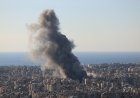
The strikes have hit close to home. A drone attack sparked a fire at an oil tank farm in Fujairah, while UAE airspace was temporarily closed as an exceptional precautionary measure following Iranian missile and drone attacks . These direct hits on Gulf infrastructure have transformed the conflict from a distant confrontation between Iran and Israel into an immediate threat to the region's economic lifelines.
Iran's strategy appears designed precisely to exploit this vulnerability. Unable to fight a conventional war against US and Israeli forces, Tehran is fighting to make the cost of victory unbearable. Using swarms of cheap loitering munitions, it has struck US bases in Qatar, Bahrain, and the UAE, as well as oil terminals in Fujairah and luxury hotels in Dubai. The message to the Gulf monarchies is unmistakable: you are not bystanders, you are targets .
This dynamic has created what analysts describe as a "sunk-cost war," with Gulf states desperate for a conclusion they cannot define but increasingly convinced that only a decisive US victory can guarantee their long-term security . The calculation reflects deep anxiety about Iran's retaliatory capacity and the sustainability of Gulf prosperity under sustained attack.
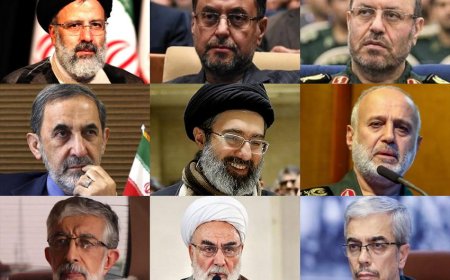
The leadership transition in Tehran has added another layer of complexity. Following the death of Supreme Leader Ayatollah Ali Khamenei in the opening strikes of the conflict, his son Mojtaba Khamenei has inherited both the throne and the vendetta. Under his direction, Iran's Revolutionary Guard has seeded the Strait of Hormuz with smart mines and anti-ship missiles, effectively closing the waterway through which 20% of the world's oil flows .
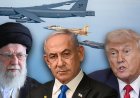
US President Donald Trump expressed confidence Monday that the conflict would end soon, telling reporters in the Oval Office: "It'll be wrapped up soon. And we're going to have a much safer world when it's wrapped up. It'll be wrapped up soon. We're going to have a much safer world" . However, Trump also expressed frustration that the United States has long protected Gulf oil routes without sufficient acknowledgment from allies who benefit.
"So, China is a great example. They get 91% of their oil from the Hormuz Strait, which we've protected for years. And it always bothered me that we have these countries - Japan gets 95% of its from the straits, the Hormuz Straits - and it always bothered me that we're protecting and we don't need them," Trump said .