IEA Warns of 'Largest Oil Supply Shock in History' as Strait of Hormuz Closure Halts 20% of Global Supply; TotalEnergies Shuts 15% of Output
The International Energy Agency (IEA) has declared the ongoing Middle East conflict has created the "largest oil supply shock in history," with the closure of the Strait of Hormuz cutting off approximately 20% of global oil supplies and 20% of LNG trade. Major energy companies including TotalEnergies have shut down or reduced production in Qatar, Iraq, and UAE offshore fields, representing 15% of the company's global output. Brent crude has surged past $105 per barrel, prompting the IEA to authorize a record 400 million barrel emergency reserve release. Drone attacks on UAE's Fujairah port and Abu Dhabi's Ruwais refinery have further disrupted regional energy infrastructure
 Sercan Roni
The International Energy Agency (IEA) has declared that the ongoing Middle East conflict has created the "largest oil supply shock in history," as the closure of the Strait of Hormuz cuts off approximately 20% of global oil supplies and 20% of liquefied natural gas (LNG) trade. The warning comes as major energy companies halt operations across the region and drone attacks target critical infrastructure .
IEA: 'Historic' Supply Shock
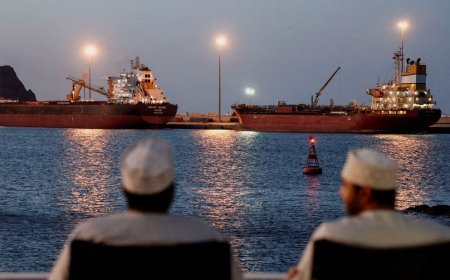
In a report released Thursday, the IEA said global oil supply is expected to drop by 8 million barrels per day in March – nearly 8% of world demand – due to the blockage of the Strait of Hormuz. The strategic waterway, through which roughly 25% of global seaborne oil trade passes, has been effectively closed since Iran imposed restrictions following the US-Israeli attacks on February 28 .
"The ongoing conflict has created the largest oil supply shock in history," the IEA warned, noting that major producers across the Middle East have been forced to shut in or reduce output. The agency's 32 member countries have unanimously approved the largest-ever coordinated release of emergency oil reserves, pledging 400 million barrels to global markets. Key contributions include 172 million barrels from the US, 80 million barrels from Japan, and 23.6 million barrels from Canada .
TotalEnergies Shuts 15% of Global Output
French energy giant TotalEnergies announced that the conflict is impacting part of its upstream operations, with production shut down or in the process of shutting down in Qatar, Iraq, and offshore fields in the UAE. These disruptions represent about 15% of the company's total global oil and gas production .
However, onshore production in the UAE—accounting for roughly 210,000 barrels per day for TotalEnergies—remains unaffected at this stage. The company noted that an increase of $8 per barrel in Brent crude price would offset the expected 2026 cash flow from its affected assets at an oil price assumption of $60 per barrel .
Operations at the Satorp refinery in Saudi Arabia, a joint venture with Saudi Aramco, are continuing normally and supplying the domestic market, TotalEnergies confirmed .
Qatar Declares Force Majeure on LNG
Qatar, the world's largest LNG exporter supplying roughly 20% of global LNG, has been forced to halt production following Iranian strikes that prompted precautionary shutdowns. State-run QatarEnergy has declared force majeure to affected buyers, warning that the ongoing conflict could force Gulf exporters to halt production entirely if the Strait of Hormuz remains closed .
Qatari Energy Minister Saad Sherida Al-Kaabi has warned that continued closure could drive oil prices to $150 per barrel within two to three weeks, severely damaging global economies .
TotalEnergies said the shutdown of LNG production in Qatar will have limited impact on its LNG trading activities—estimated at around 2 million tonnes in 2026—since most Qatari LNG is marketed by QatarEnergy directly .
UAE Infrastructure Under Attack
The conflict has moved beyond production shutdowns to direct strikes on energy infrastructure. Drone attacks have targeted multiple facilities across the UAE:
Fujairah Port: Oil loading operations at the Port of Fujairah, located just outside the Strait of Hormuz and handling about 1 million barrels per day of UAE's flagship Murban crude oil, were suspended following a drone attack that sparked a fire in the petroleum industrial zone. Although operations have since resumed, it remains unclear whether activity has fully returned to normal .
Ruwais Refinery: Abu Dhabi's Ruwais refinery, the largest single-site refinery in the Middle East, was temporarily closed following a separate drone attack, according to Reuters reports .
The UAE's state-owned Abu Dhabi National Oil Company (ADNOC) announced it is "managing" offshore output levels to address storage requirements amid the regional conflict, preserving operational flexibility to resume normal operations without prolonged delay .
Iran's Kharg Island Targeted
Over the weekend, US President Donald Trump announced strikes on military targets on Iran's Kharg Island, which handles approximately 90-95% of the country's crude exports—around 1.7 million barrels per day. Trump threatened further strikes on the island's oil infrastructure if Iran continues to block shipping in the Strait of Hormuz .
Iran has warned that any targeting of its oil and energy infrastructure would trigger retaliatory attacks on energy facilities linked to the US in the region. Despite the strikes, Iran claimed its oil facilities sustained no damage .
Regional Production Cuts Across the Gulf
The conflict has forced energy producers across the region to curtail operations:
Kuwait: Kuwait Petroleum Corporation (KPC) announced a precautionary cut in crude oil production and refining, declaring force majeure due to threats against vessel passage through the Strait of Hormuz and the "near-total" absence of available ships to transport crude and petroleum products .
Iraq: Iraq's oil production has dropped by nearly 60%, falling from approximately 3.3 million barrels per day before the conflict to about 1.3 million barrels per day currently, according to an Iraqi Oil Ministry official .
Saudi Arabia: While Saudi Aramco temporarily shut down a refinery as a precautionary measure following a drone strike, the company has begun redirecting crude shipments to Yanbu Port on the Red Sea to enhance safety and maintain customer supplies .
Goldman Sachs: Energy Sectors Diverge
According to a Goldman Sachs report, energy markets have seen sharp divergence across subsectors following the escalation. Refining companies and LNG-linked infrastructure have emerged as the biggest beneficiaries, gaining from tighter fuel markets and higher global gas spreads .
"Global LNG prices have moved significantly higher as a result of the effective closure of Qatari exports... while US gas prices are mostly flat," the report noted, adding that companies with exposure to the global gas-US gas spread could see significant margin upside .
Upstream exploration and production companies have broadly benefited from stronger crude prices, but gains have been uneven. The report noted that the conflict has forced several offshore rigs in the Persian Gulf to halt operations, impacting earnings expectations for some oilfield service providers .
Oil Prices Surge Past $105
Brent crude futures rose 2.2% to $105.44 per barrel on Monday, while West Texas Intermediate gained 1.3% to $100 per barrel. Both contracts have surged more than 40% since the conflict began, reaching their highest levels since 2022 .
"Investors seem to recognize that if just two weeks of disruption at the Strait of Hormuz have inflicted this level of damage on production, exports and refining, the consequences of a prolonged conflict would be severe, especially as inventories are steadily depleted," said PVM analyst Tamas Varga .
Global Impact and Outlook
The energy shock is transmitting through global supply chains, raising transportation, manufacturing, and food prices while unsettling financial markets. The IEA's emergency reserve release aims to offset shortages and stabilize prices, but analysts warn that if disruptions persist, oil could average well above pre-conflict levels through much of 2026 .
US Energy Secretary Chris Wright expressed optimism, saying he expected an end to the war within "the next few weeks," with oil supplies rebounding and energy costs falling afterwards . However, with no ceasefire in sight and both sides showing little sign of de-escalation, the energy crisis shows no immediate signs of abating.